
Green Card vs Visa: What's the Difference and Which Path Is Right for You?
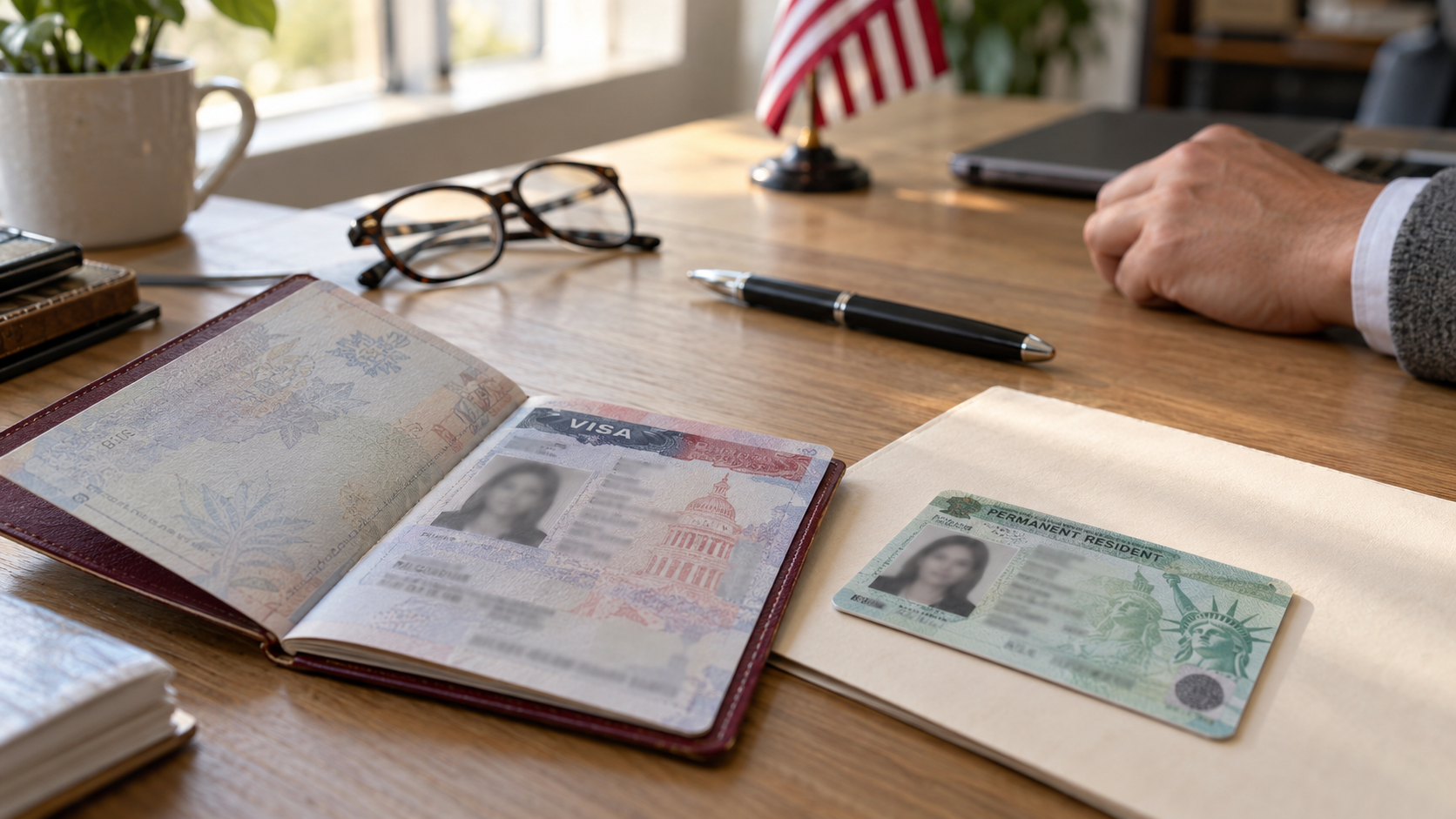
When comparing a green card vs visa, it's important to understand that they serve different purposes. A visa generally allows someone to enter or remain in the United States temporarily for a specific reason, such as employment, education, or tourism. A green card grants lawful permanent residence, allowing an individual to live and work in the United States indefinitely, provided they continue to meet immigration requirements.
Understanding how each option works can help you choose the immigration path that best supports your career goals and long-term plans.
What Is a Visa?
A visa is official authorization that allows a foreign national to travel to the United States for a specific purpose. Most visas are issued by a U.S. embassy or consulate before the traveler arrives in the country.
There are two primary categories of U.S. visas.
Nonimmigrant Visas
Nonimmigrant visas are intended for temporary stays and authorize individuals to enter the United States for a specific activity and period of time.
Common examples include:
- O-1A and O-1B visas for individuals with extraordinary ability or achievement
- H-1B visas for specialty occupations
- F-1 student visas
- B-1/B-2 visitor visas
- L-1 visas for intracompany transferees
Each visa category has its own eligibility requirements, permitted activities, and authorized period of stay.
Immigrant Visas
An immigrant visa is issued to individuals who intend to become permanent residents of the United States. After entering the country with an approved immigrant visa, they generally receive lawful permanent residence, commonly known as a green card.
It's also important to remember that a visa does not guarantee admission into the United States. U.S. Customs and Border Protection (CBP) makes the final decision about entry after reviewing a traveler's documentation and intended purpose of travel.
What Is a Green Card?
A green card, officially known as Form I-551, serves as proof that someone has been granted lawful permanent residence in the United States.
Unlike most temporary visas, a green card allows someone to live and work permanently in the United States as long as they continue to satisfy immigration requirements. Green card holders can generally work for almost any employer, start a business, and establish long-term residence.
Most green cards are valid for 10 years and must be renewed before they expire. Some individuals receive a two-year conditional green card before applying to remove the conditions on their residence.
After maintaining permanent residence for the required period, typically five years, or three years for certain spouses of U.S. citizens, many permanent residents become eligible to apply for U.S. citizenship through naturalization.
Green Card vs Visa: The Biggest Differences
Although the terms are sometimes used interchangeably, a visa and a green card provide very different immigration benefits.
For many professionals, obtaining a temporary work visa is the first step toward building a career in the United States before pursuing permanent residence.
How Do You Get a Green Card?
Green cards are available through several immigration pathways, including employment, qualifying family relationships, refugee or asylee status, certain humanitarian programs, and the Diversity Visa Program when available.
Consular Processing
Applicants who are outside the United States generally complete the immigration process through a U.S. embassy or consulate after an immigrant petition has been approved. Following a successful interview, they receive an immigrant visa allowing them to enter the United States as a lawful permanent resident.
Adjustment of Status
Applicants already lawfully present in the United States may be eligible to apply for permanent residence without leaving the country through adjustment of status.
Common forms used during this process include:
- Form I-130 – Petition for Alien Relative
- Form I-140 – Immigrant Petition for Alien Worker
- Form I-485 – Application to Register Permanent Residence or Adjust Status
- Form I-765 – Application for Employment Authorization
Some applicants may qualify to file certain applications concurrently, while employment-based applicants may also need to monitor the Department of State's Visa Bulletin if their category is subject to annual visa limits.
O-1A vs. EB-1A: A Common Path for Extraordinary Ability Professionals
Professionals with extraordinary ability often compare the O-1A visa and the EB-1A green card. Although both recognize exceptional achievement, they serve different purposes.
The O-1A provides temporary work authorization through a U.S. petitioner, while the EB-1A is an employment-based immigrant category that offers a pathway to permanent residence and may allow qualified applicants to self-petition.
Both categories rely on similar types of evidence, including:
- National or international awards
- Published articles or scholarly research
- Media recognition
- Original contributions to a field
- Critical roles within distinguished organizations
- Membership in organizations requiring outstanding achievements
Many professionals first pursue an O-1A visa to establish themselves in the United States while continuing to build the accomplishments that may later support an EB-1A petition. Because both categories require extensive evidence, maintaining thorough documentation of professional achievements throughout your career can strengthen future immigration opportunities.
Premium processing may also be available for certain employment-based petitions, allowing applicants to receive a faster initial response from USCIS when time is a factor.
Family-Based Green Cards
While employment-based immigration is common for highly accomplished professionals, many people obtain permanent residence through qualifying family relationships.
A U.S. citizen or lawful permanent resident may sponsor eligible family members by filing Form I-130, Petition for Alien Relative. Applicants who are already lawfully present in the United States may also be eligible to file Form I-485 to adjust status, and many submit Form I-765 at the same time to request temporary work authorization while their application is pending.
Some family-based applicants initially receive a two-year conditional green card and later file Form I-751 to remove those conditions and obtain a standard 10-year green card.
Rights and Responsibilities of Green Card Holders
Obtaining a green card provides greater flexibility than most temporary visas, but permanent residents also have ongoing responsibilities.
Green card holders generally may:
- Work for almost any employer in the United States
- Change jobs without obtaining a new work visa
- Start or own a business
- Live permanently in the United States
To maintain lawful permanent residence, they should:
- Keep the United States as their primary residence
- Renew their green card before it expires
- Report address changes to USCIS when required
- Follow all applicable immigration laws
After meeting the required residency period and other eligibility requirements, many permanent residents become eligible to apply for U.S. citizenship.
Timeline, Fees, and Practical Steps
Processing times vary depending on the immigration category, government workload, and whether the application is filed inside or outside the United States.
Before beginning the process, applicants should gather important documents such as:
- Passport
- Birth certificate
- Employment or academic records
- Marriage or family documents, if applicable
- Awards, publications, or other professional evidence supporting employment-based petitions
Creating a USCIS online account allows applicants to monitor their case status throughout the process. Government filing fees vary by immigration category and may change periodically, so applicants should always verify the current fees before submitting an application.
Preparing documentation early and responding promptly to any USCIS requests can help minimize unnecessary delays.
How O1 Experts Can Help
For professionals with extraordinary ability, deciding between temporary work authorization and permanent residence is often part of a broader career strategy. O1 Experts helps clients evaluate whether an O-1 visa or an EB-1A green card best supports their immediate opportunities and long-term immigration goals.
Our team assists accomplished professionals in technology, business, research, entrepreneurship, athletics, entertainment, and the arts by providing:
- O-1 visa eligibility assessments
- EB-1A evaluations
- Petition strategy development
- Evidence review and organization
- Agent-petitioner solutions for qualified applicants
- Flat-fee pricing with no percentage of future earnings
- End-to-end petition preparation and filing support
Whether you're preparing your first employment-based petition or planning your transition to permanent residence, O1 Experts can help you build a strategy that aligns with your professional achievements and future goals. Contact O1 Experts to request an eligibility assessment.
Frequently Asked Questions
Which is better, a visa or a green card?
Neither is universally better. A visa is intended for temporary purposes such as employment, study, or travel, while a green card provides lawful permanent residence for individuals who intend to live and work in the United States long term.
Can you stay in the U.S. forever with a green card?
A green card allows someone to live in the United States indefinitely, provided they continue to maintain permanent resident status and comply with U.S. immigration laws.
Do you get a green card or a visa first?
That depends on the immigration pathway. Many professionals first work in the United States on a temporary visa before later applying for a green card, while others receive an immigrant visa abroad before becoming permanent residents.
What is the difference between a work visa and a green card?
A work visa authorizes employment for a limited period under specific conditions. A green card grants lawful permanent residence, allowing much greater flexibility to live and work in the United States.
Tags:
Ready To Get Started?
Fill out the form and our expert team will get back to you shortly.
Office Hours
Monday - Sunday: 8AM - 8PM PST
Our Address
609 Metairie Rd
#4013
Metairie, LA 70005