
O1A vs O1B: Understanding the Key Differences in 2026

The O-1 visa represents one of the most prestigious temporary work authorizations available to individuals with extraordinary ability, yet many applicants struggle to understand the critical distinction between its two primary subcategories. The o1a vs o1b comparison isn't merely an administrative detail; it fundamentally shapes your application strategy, evidence requirements, and approval likelihood. Understanding which category aligns with your professional background can mean the difference between a successful petition and a costly denial. This comprehensive guide breaks down everything you need to know about these two distinct visa classifications and how to navigate their unique requirements.
Understanding the Fundamental Distinction
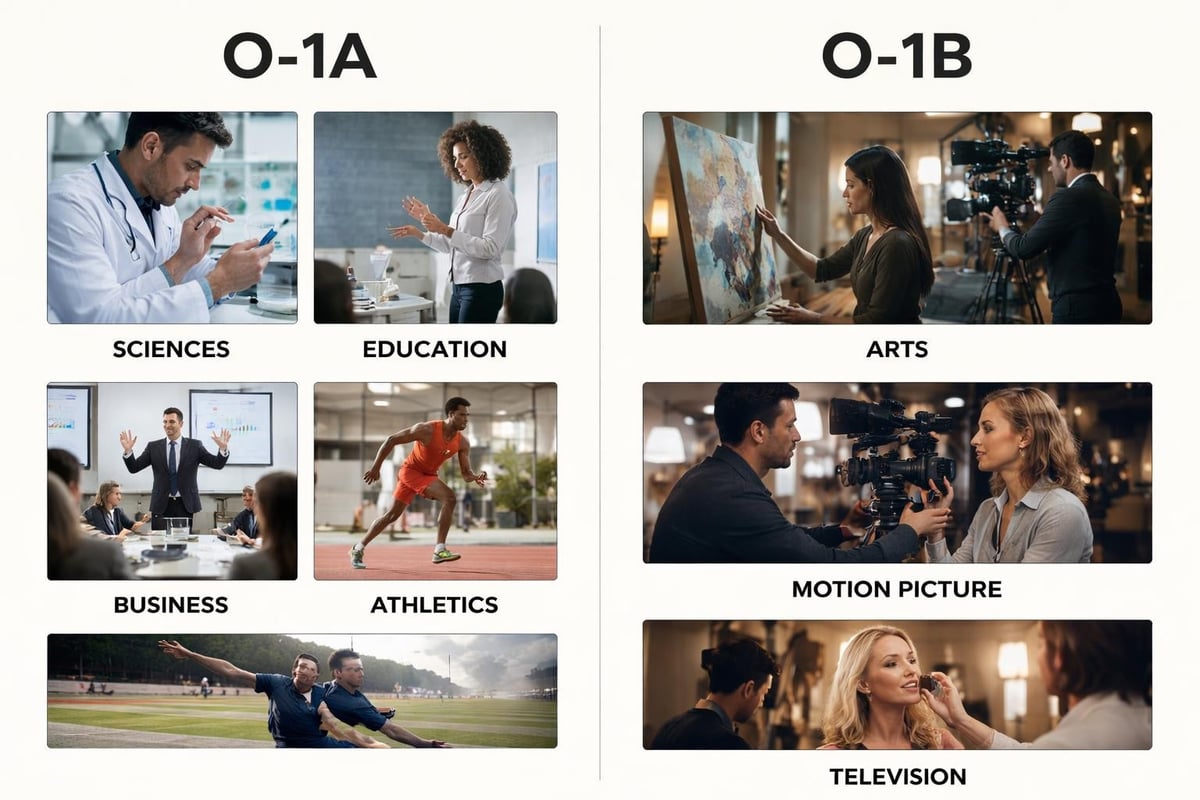
The O-1 visa categories established by USCIS divide applicants based on their field of expertise rather than their level of achievement alone. The O-1A visa serves individuals who have demonstrated extraordinary ability in sciences, education, business, or athletics. These fields emphasize measurable achievements, peer recognition, and contributions that advance the industry or field. The O-1B visa, by contrast, caters to those in the arts, motion picture, and television industries, where extraordinary achievement often manifests through creative output, critical acclaim, and artistic influence.
This fundamental division creates entirely different evaluation frameworks. When examining o1a vs o1b requirements, you'll notice that O-1A applicants must prove sustained national or international acclaim, while O-1B applicants in arts must demonstrate distinction, and those in motion picture or television must show extraordinary achievement. The terminology matters significantly because "distinction" represents a slightly lower threshold than "extraordinary ability," though both remain substantial standards.
Field Classification Challenges
Determining which category applies to your situation isn't always straightforward. A software engineer developing video game technology might initially seem like an O-1B candidate due to the entertainment connection, but their work in computer science typically qualifies them for O-1A consideration. Similarly, a data scientist working for a film studio analyzing audience metrics would generally pursue O-1A criteria despite the entertainment industry connection.
Creative directors face particularly complex classification decisions. Those primarily engaged in commercial advertising or corporate branding typically fall under O-1B, while those whose work centers on business strategy and market positioning might qualify under O-1A business achievements. The nature of your daily responsibilities and professional recognition matters more than your job title.
Evidence Requirements and Documentation Standards
The evidentiary standards represent perhaps the most significant practical difference in the o1a vs o1b comparison. O-1A applicants must satisfy at least three of eight specific criteria, or provide evidence of a one-time major achievement such as a Nobel Prize, Olympic medal, or equivalent. The eight criteria include:
- Receipt of nationally or internationally recognized prizes or awards for excellence
- Membership in associations requiring outstanding achievements as judged by recognized experts
- Published material about the beneficiary in professional or major trade publications
- Participation as a judge of the work of others in the same or allied field
- Original scientific, scholarly, artistic, athletic, or business-related contributions of major significance
- Authorship of scholarly articles in professional journals or major media
- Employment in a critical or essential capacity for organizations with distinguished reputations
- Commanding a high salary or other significantly high remuneration
O-1B applicants in the arts must meet at least three of six criteria, which include distinctions such as lead or starring roles, critical reviews, and recognition from organizations and experts in the field. For those in motion picture or television, the O-1B standards require showing that services performed are for productions or events with a distinguished reputation, along with evidence of extraordinary achievement.
Quality Over Quantity
The o1a vs o1b evaluation doesn't simply count evidence pieces. Immigration officers assess the quality, relevance, and significance of each submission. A single peer-reviewed publication in a top-tier scientific journal may carry more weight than ten blog posts, regardless of readership numbers. For O-1B candidates, a supporting letter from an Academy Award-winning director holds substantially more value than numerous letters from less distinguished industry contacts.
| Evidence Type | O-1A Weight | O-1B Weight | Key Consideration |
|---|---|---|---|
| Major Awards | Highest | Highest | Must be nationally/internationally recognized |
| Expert Letters | High | Very High | Recommender's credentials critical for both |
| Media Coverage | Medium-High | High | Publication's reputation and reach matter |
| Membership | Medium | Medium | Associations must require outstanding achievement |
| Financial Records | Medium | Low-Medium | More relevant for O-1A business professionals |
| Critical Reviews | Low | Very High | Essential for O-1B arts candidates |
Consultation and Advisory Opinion Requirements
Every O-1 visa petition requires an advisory opinion from an appropriate peer group, labor organization, or management organization. The o1a vs o1b distinction creates different consultation requirements based on your field. O-1A applicants typically obtain opinions from professional associations relevant to their expertise area, such as scientific societies, business organizations, or athletic governing bodies.
O-1B petitions require consultation with labor and management organizations with expertise in the beneficiary's field. For entertainment industry professionals, this often involves organizations like SAG-AFTRA or the Directors Guild of America. Artists may need consultations from relevant arts councils or professional associations specific to their discipline.

Navigating Multiple Fields
Professionals working across multiple disciplines face unique challenges in the o1a vs o1b framework. You cannot file a single petition covering both categories; instead, you must determine which represents your primary extraordinary ability. A composer who creates film scores and also conducts research in music cognition must choose whether to emphasize their artistic achievements (O-1B) or scientific contributions (O-1A).
Some applicants qualify under both categories but should strategically select the path offering the strongest evidence package. Consider where your most prestigious recognitions cluster, which peer groups can provide the most compelling advisory opinions, and where your achievements show the clearest pattern of sustained excellence. Working with experienced professionals who understand O-1 visa sponsorship requirements can help navigate these strategic decisions.
Processing Times and Petition Procedures
Both O-1A and O-1B petitions follow the same basic procedural framework, but practical processing experiences can vary. The standard processing time for O-1 petitions typically ranges from two to three months, though USCIS processing times fluctuate based on service center workload and current immigration policies. Premium processing remains available for both categories, guaranteeing a 15-business-day response for an additional fee.
The o1a vs o1b distinction doesn't create different processing timelines, but it does influence Request for Evidence (RFE) patterns. O-1A petitions more frequently receive RFEs questioning whether scientific contributions constitute "major significance" or whether business achievements truly demonstrate sustained acclaim. O-1B petitions often face scrutiny regarding whether performances achieved sufficient critical acclaim or whether the beneficiary played lead versus supporting roles.
Building a Stronger Initial Petition
- Document the impact: For O-1A, quantify how your work advanced the field through citations, implementations, or industry adoption. For O-1B, demonstrate how your work influenced audiences, critics, or other artists
- Establish peer recognition: Secure expert letters from recognized leaders who can personally attest to your standing in the field
- Show sustained excellence: Present achievements spanning multiple years rather than a single breakthrough moment
- Connect evidence to criteria: Explicitly map each piece of evidence to specific regulatory requirements
- Address potential weaknesses: Proactively explain gaps or unusual career patterns before USCIS questions them
Duration, Extensions, and Long-Term Planning
Both O-1A and O-1B visas grant initial periods of up to three years, with unlimited one-year extensions available as long as you continue working in your field of extraordinary ability. The o1a vs o1b comparison doesn't create different duration limits, but career trajectory implications differ significantly.
O-1A professionals, particularly those in sciences and business, often transition to EB-1A green card applications after establishing themselves in the United States. The evidence requirements overlap substantially, and many O-1A holders build their portfolios specifically with eventual permanent residence in mind. This strategic approach leverages the temporary O-1 status as a stepping stone toward immigration permanence.
O-1B visa holders face more complex transition paths. While comparing O-1 and EB-1 visa options shows similar evidence frameworks, arts professionals often find it more challenging to demonstrate the quantifiable impact required for employment-based green cards. Many O-1B holders maintain temporary status for extended periods or explore alternative paths like marriage-based green cards or EB-5 investor visas.
Family Considerations
Both O-1A and O-1B visa holders can bring spouses and unmarried children under 21 to the United States on O-3 dependent visas. The o1a vs o1b distinction doesn't affect dependent eligibility, but career flexibility does. O-3 dependents cannot work in the United States, which creates planning considerations for dual-career families. Understanding O-1 spouse visa limitations helps families prepare for this restriction.
| Visa Aspect | O-1A | O-1B | Shared Features |
|---|---|---|---|
| Initial Duration | Up to 3 years | Up to 3 years | Same maximum |
| Extensions | 1-year increments | 1-year increments | Unlimited extensions |
| Dependent Visas | O-3 available | O-3 available | No work authorization |
| Green Card Path | EB-1A common | More complex | Both eligible for various categories |
| Job Flexibility | Must maintain field | Must maintain field | Can change employers |
Agent and Petitioner Requirements
The o1a vs o1b framework creates different petitioner relationships, particularly regarding agent representation. All O-1 petitions require a U.S. employer, U.S. agent, or foreign employer through a U.S. agent to file the petition. However, O-1B beneficiaries more commonly work through agents representing multiple clients across various projects and engagements.
Understanding O-1 visa agent arrangements becomes particularly important for entertainment and arts professionals who lack traditional employer relationships. Agents can file petitions on behalf of artists, performers, and other O-1B candidates, establishing the required U.S. connection while preserving professional flexibility. This agent-based model fits the project-to-project nature of entertainment careers.
O-1A professionals typically work in more traditional employment structures, though consulting arrangements and entrepreneurial ventures remain possible. Business professionals, scientists, and academics generally secure direct employer sponsorship, though multi-client consulting practices can utilize agent petitions similar to O-1B candidates.

Strategic Application Considerations
When evaluating o1a vs o1b options for your situation, several strategic factors should guide your decision beyond basic eligibility. Consider your long-term career goals, the strength of available evidence in each category, and which peer groups can provide the most compelling advisory opinions.
Geographic considerations also matter. Certain USCIS service centers develop expertise in particular industries, and filing location can influence how officers evaluate borderline cases. California Service Center handles high volumes of entertainment visa applications and may bring more nuanced understanding to O-1B petitions in motion picture and television.
Common Application Mistakes
- Misclassifying your field: Forcing your achievements into the wrong category weakens your petition significantly
- Submitting generic evidence: Letters and materials that could apply to any competent professional fail to demonstrate extraordinary ability
- Ignoring the comparison class: USCIS evaluates you against peers in your specific field, not against the general population
- Overlooking sustained achievement: One-time accomplishments rarely suffice; show consistent excellence over time
- Neglecting the advisory opinion: Treating this as a formality rather than a critical endorsement weakens your petition
Financial and Practical Implications
The o1a vs o1b comparison creates minimal differences in direct costs, as filing fees remain identical regardless of category. However, indirect costs vary based on your field and circumstances. O-1A applicants in academic or research positions may access institutional support for legal fees and application costs, while O-1B artists and entertainers typically bear these expenses personally.
Salary expectations and compensation structures differ significantly between the categories. O-1A business professionals and scientists often command salaries placing them well above the "high remuneration" evidence threshold, while O-1B artists may achieve extraordinary distinction despite more modest financial compensation. These patterns reflect broader industry realities rather than visa requirements themselves.
Both categories offer valuable flexibility as an H1B visa alternative, avoiding the cap restrictions and lottery system that make H-1B status increasingly difficult to obtain. For qualified professionals, the O-1 path provides more direct access to U.S. work authorization, though meeting the extraordinary ability threshold requires substantially stronger credentials than H-1B standards demand.
Understanding the nuances of o1a vs o1b classifications empowers you to build a strategic, compelling petition that accurately reflects your extraordinary abilities and professional achievements. Whether your expertise lies in sciences, business, arts, or entertainment, choosing the correct category and assembling evidence that convincingly demonstrates your standing among the small percentage at the top of your field remains essential. O1 Experts specializes in guiding professionals through this complex evaluation process, helping you assess eligibility, gather compelling documentation, and submit petitions positioned for approval. If you're ready to explore whether the O-1 visa aligns with your qualifications and career goals, our team brings the expertise and personalized attention your extraordinary ability deserves.
Ready To Get Started?
Fill out the form and our expert team will get back to you shortly.
Office Hours
Monday - Sunday: 8AM - 8PM PST
Our Address
609 Metairie Rd
#4013
Metairie, LA 70005